
Beyond the Gaze, Where Time Lingers: A Solo Exhibition by Jio Choi
July 1, 2025
'시선 너머, 시간이 머문 자리'
지오최 개인전 《시선 너머, 시간이 머문 자리》 2025. 6. 20 (금) - 8.1 (금)
여름의 기운이 본격적으로 시작되는 6월, 갤러리마리에서 지오최 개인전 《시선 너머, 시간이 머문 자리》가 6월 20일부터 개최된다. 광화문 인근에 자리 잡은 갤러리마리에서 열리는 이번 전시는, 도시의 한복판에서도 시선을 잠시 멈추어 사유할 수 있는 회화적인 장면을 제안하려는 정마리 대표(갤러리마리 대표)의 기획으로 열리게 되었다.
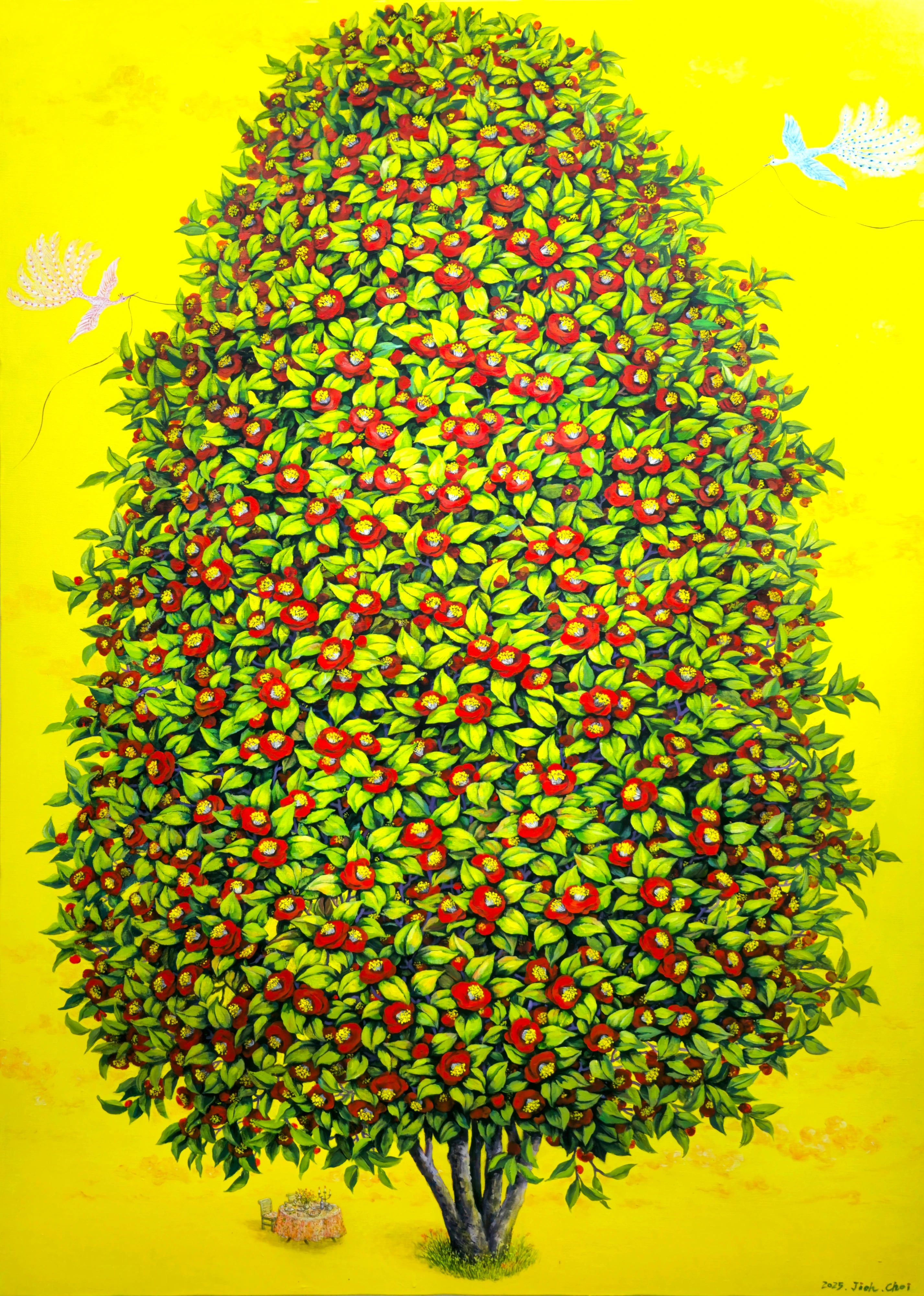
지오최 작가의 수년 간 기록되어 온 사유의 결과물인 만큼, 작가가 캔버스에 담은 화면은 단순한 재현을 넘어 기억과 감각이 겹쳐진 시간을 품고 있다. 우리는 때때로 풍경 앞에서 발길을 멈춘다. 그 이유는 단지 눈앞의 장면이 아름다워서가 아니라, 그 안에 나의 기억, 감정, 시간이 겹쳐 있기 때문이다. 지오최의 회화는 바로 그런 '머무름'을 위한 풍경이다.
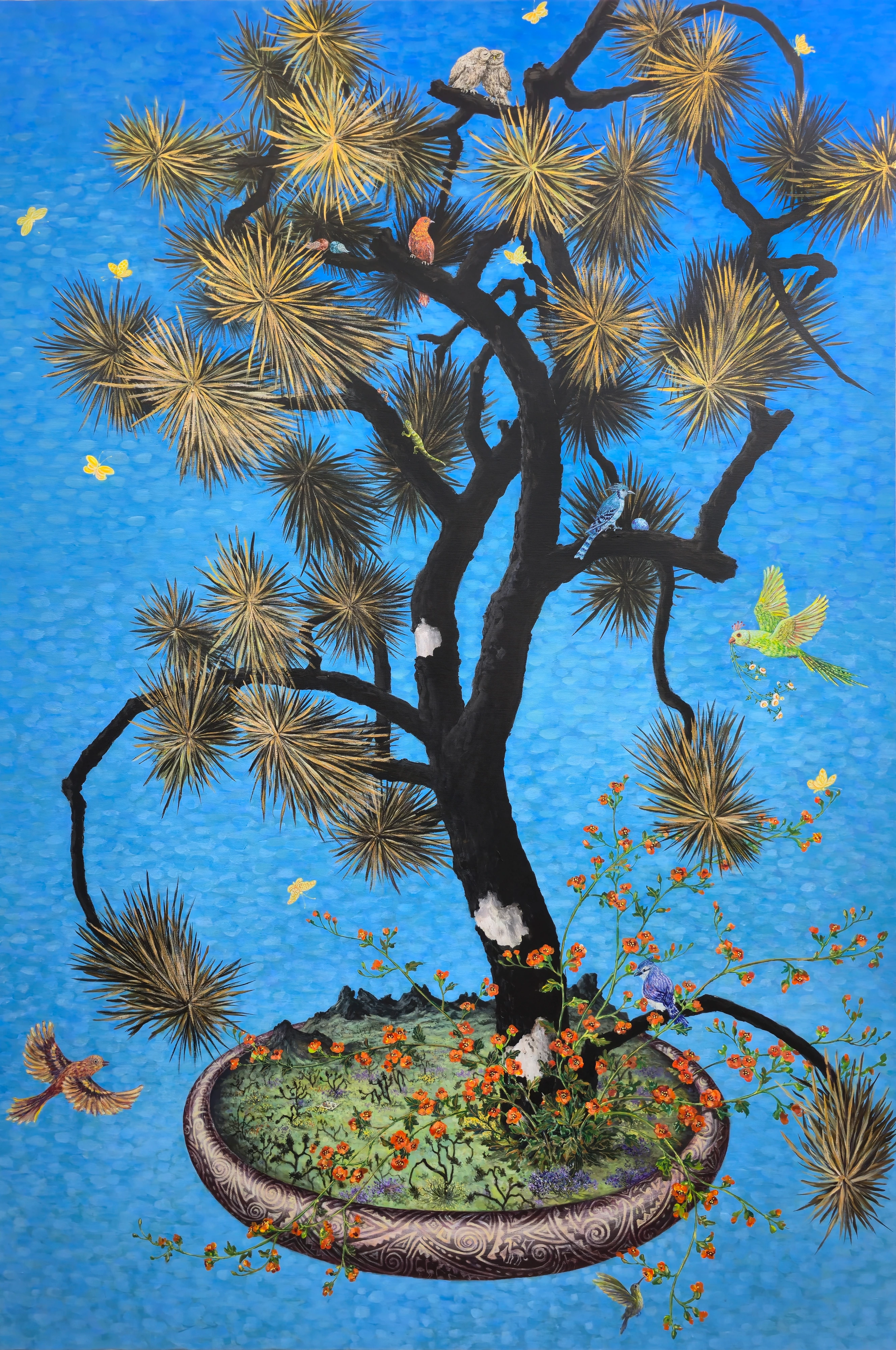
그리고 그 풍경은 단순한 풍경이 아닌, 풍경 너머의 시간을 느끼고, 침묵 속에서 감정을 듣는 지오최의 회화적 사유의 결과물인 셈이다. 지오최의 명상적 풍경화를 마주할 때 우리는 자연에 대한 경외심과 애정을 느끼는 것뿐만이 아니라 그 안에 나의 시간, 내면의 감정과 자신만의 기억과 꿈, 개인의 신화를 녹여 낸 현대회화의 연결점으로 해석해 볼 수 있다.
이번 전시는 작가가 오랜 시간 동안 마주한 자연과 감정의 풍경들을 한데 모아 중첩시킨 결과이다. 작업의 출발은 언제나 치열한 관찰과 사유에서 시작된다.
그러나 그 관찰의 기록들과 감정의 편린들이 다시 펼쳐지는 작업실에서는 또 다른 차원의 여행이 시작되는 것이다. 그곳에서의 시간은 선형적으로 흐르지 않는다.
감정과 기억이 서로 교차하고, 어떤 이미지는 다시 솟아오르며, 이미 지나간 감각들이 다른 색으로 피어오르기도 한다. 그래서 지오최의 시간은 '흐름'이 아니라 '머무름'의 시간이다.
작가는 순간을 지나치지 않고, 그 자리에 머물며 감각과 감정을 켜켜이 쌓아간다.
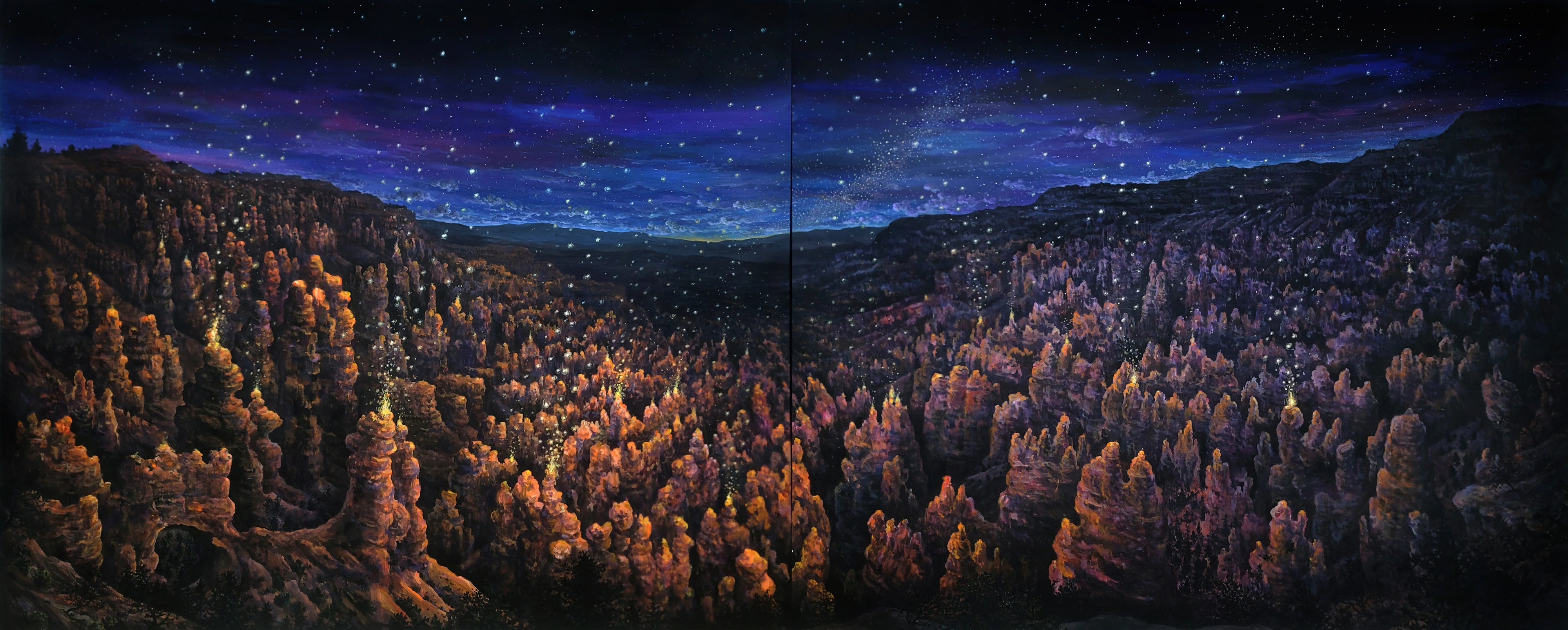
단순한 재현이 아닌, 자연을 통해 내면과 마주하고 자신을 바라보고 감정과 기억의 결을 포개는 사의적 회화이다. 이번 전시에서 주목할 만한 작품 중 하나인 《동트는 브라이스 캐년》과 《한밤의 환상곡》은 같은 장소를 각기 다른 시간과 감정으로 그려낸 연작이다. 같은 장소를 바라보되 그것이 작가의 내면에서 어떻게 숙성되고 표현되는지를 보여준다.
아침의 장엄함과 밤의 환상은 각기 다른 시간, 감정, 그리고 다른 '나'로부터 다시 비롯된다.
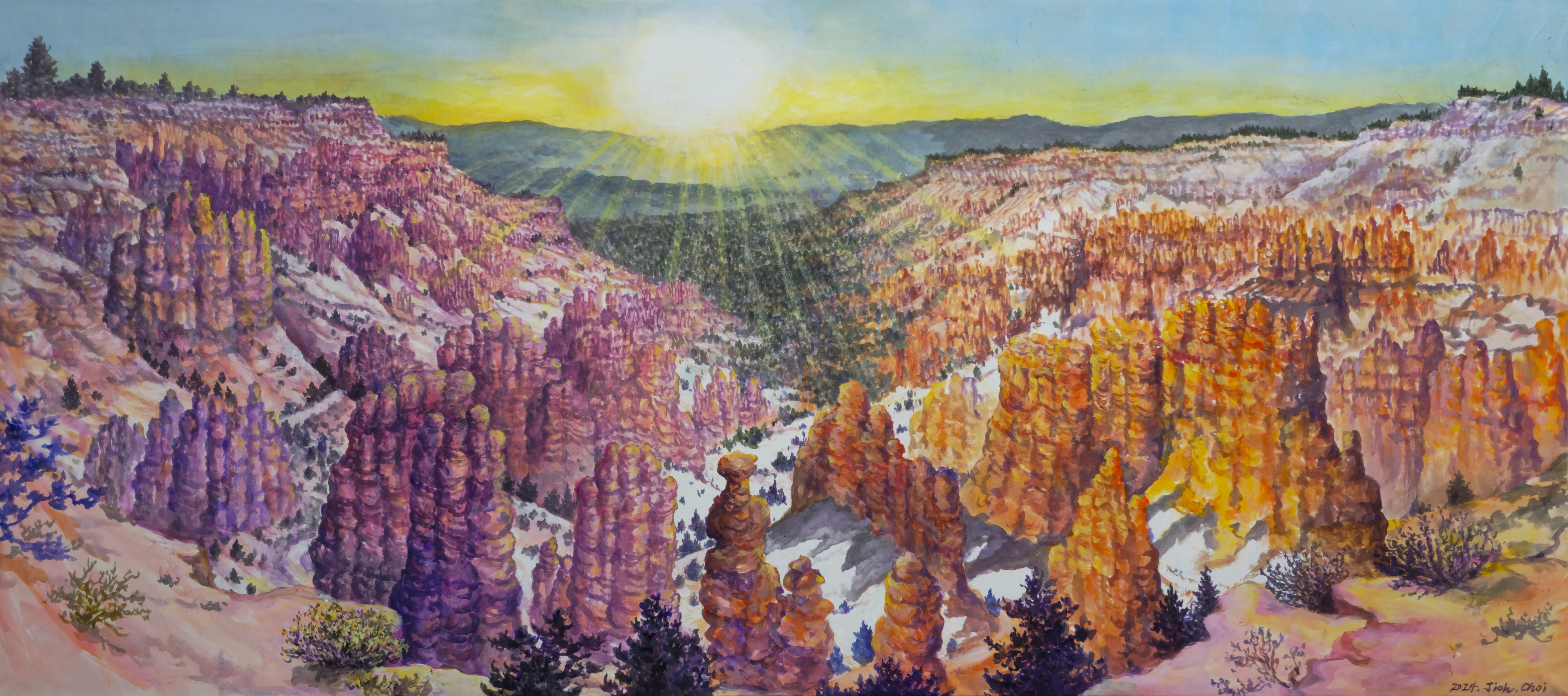
결국 그 풍경은 단지 자연의 모습이 아니라, 작가의 시간과 감정이 쌓여 나타난 풍경인 것이다.그림 속에 등장하는 어찌 보면 익숙한 사물과 풍경들(- 목수국, 샤인머스캣, 계란후라이, 매화 등)은 결코 특별한 것이 아닐 수 있으나, 이 익숙한 대상들 또한 지오최의 화면 안에서는 '어디선가 본 듯한데 전혀 다른 감각'을 일으킨다.
그 감각은 보는 이를 과거의 기억으로 혹은 아직 경험하지 않은 어떤 곳으로 데려간다.
그것은 지오최를 통해 재구성된 감정의 풍경이자 시간의 층이 켜켜이 쌓인 공간이다.
그림 한 장을 바라보는 일은 곧 한 세계를 바라보는 일이다.
지오최의 작업 앞에 서는 순간, 우리는 그 화면을 통해 각자의 시간을 마주하게 된다.
빛과 색, 형태 너머로 작가의 비선형적 시간과 감정의 층위를 마주하고, 교차가 이루어지는 곳이 바로 모든 것이 중첩된 불투명한 시간이다.
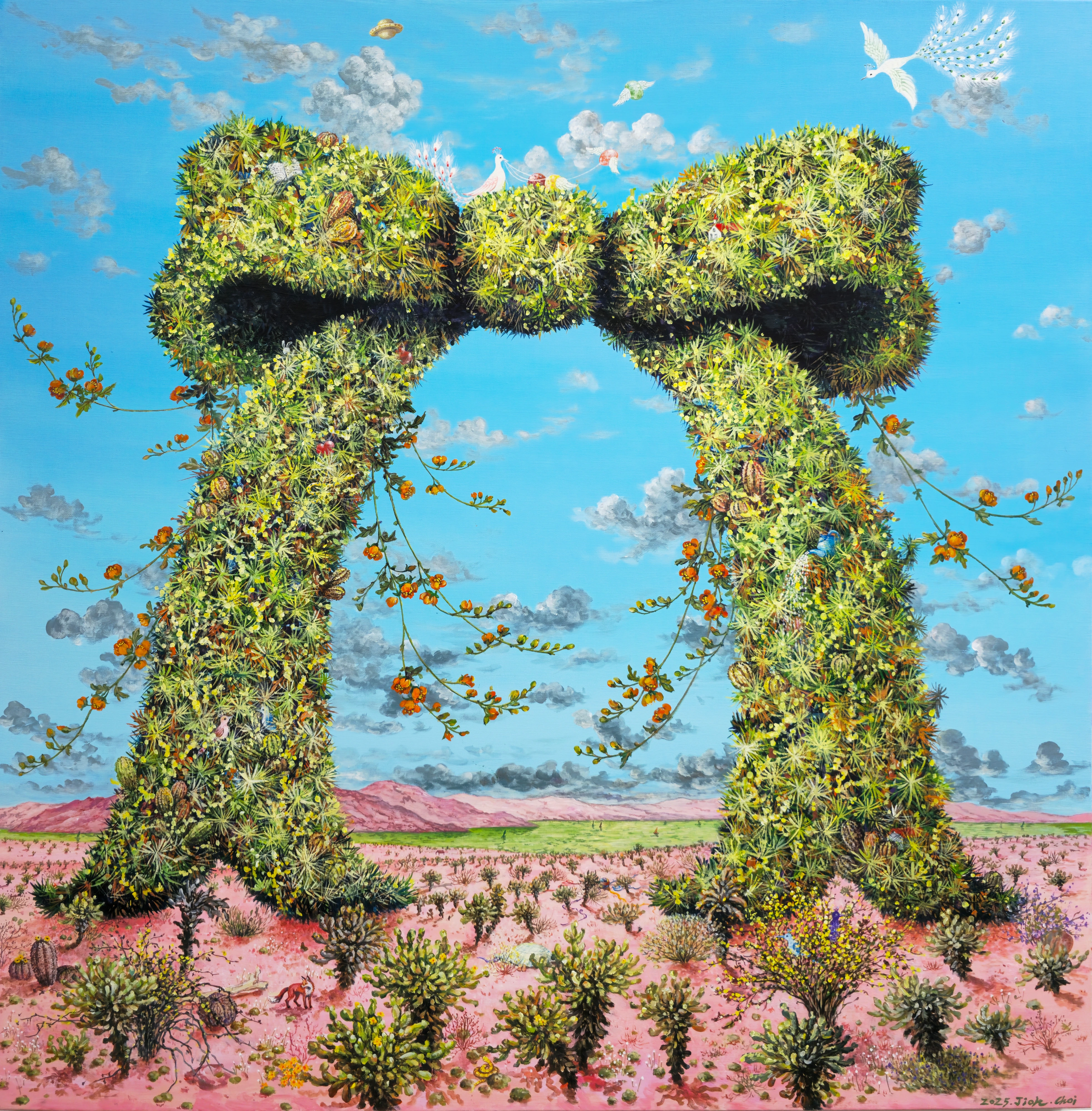
지오최는 마침내 투명한 감각의 순간을 캔버스에 새긴다. 그 회화는 이로써 '보는' 그림이 아닌 '머무는' 그림이다. 한참을 바라보고 있노라면, 어느 순간 자신의 기억이 겹쳐지고, 나의 과거가 그림 속 풍경과 연결되며 지금 이 순간의 감정이 새롭게 떠오른다. 그 순간, 우리는 비로소 풍경 너머에 놓인 자신의 이야기를 만나게 된다. 뜨거운 여름 날, 지오최가 건네는 이 조용한 여행을 함께 떠나주길 바란다.전시에서 만나보는 풍경은 작가의 것이지만, 그것을 마주하는 순간 우리는 모두 자신의 시간과 풍경을 만나게 된다.
English
'Beyond the Gaze, Where Time Lingers'
Jioh Choi Solo Exhibition 《Beyond the Gaze, Where Time Lingers》 June 20 (Fri) - August 1 (Fri), 2025
As the full force of summer begins in June, Jioh Choi's solo exhibition 《Beyond the Gaze, Where Time Lingers》 will open at Gallery Marie on June 20. This exhibition, held at Gallery Marie near Gwanghwamun, was conceived by Director Jung Mari (Director of Gallery Marie) to propose a painterly scene where one can pause and reflect even in the heart of the city.
As a culmination of the artist Jioh Choi's years of contemplation, the scenes captured on canvas transcend mere representation, embracing time interwoven with memories and sensations. We sometimes stop in front of a landscape. The reason is not simply that the scene before us is beautiful, but because our own memories, emotions, and time are layered within it. Jioh Choi's paintings are precisely such landscapes for 'lingering.'
And these landscapes are not mere scenery, but the result of Jioh Choi's painterly contemplation, feeling the time beyond the landscape and hearing emotions in silence. When we encounter Jioh Choi's meditative landscape paintings, we not only feel awe and affection for nature but can also interpret them as a connecting point in contemporary art where our own time, inner emotions, personal memories, dreams, and individual myths are dissolved.
This exhibition is the result of the artist's long-standing encounters with nature and emotional landscapes, brought together and layered. The genesis of the work always begins with intense observation and contemplation.
However, in the studio, where these records of observation and fragments of emotion are re-unfolded, another dimension of journey begins. Time there does not flow linearly.
Emotions and memories intersect, some images resurface, and past sensations blossom in different colors. Thus, Jioh Choi's time is not a 'flow' but a time of 'lingering.'
The artist does not rush through moments but lingers, layering sensations and emotions.
These are not mere representations but contemplative paintings that confront the inner self through nature, observe oneself, and layer the textures of emotions and memories. Among the notable works in this exhibition, 《Dawn at Bryce Canyon》 and 《Nocturne Fantasy》 are series depicting the same location at different times and with different emotions. They show how the same place is matured and expressed within the artist's inner world.
The grandeur of morning and the fantasy of night originate from different times, emotions, and different 'selves.'
Ultimately, these landscapes are not merely depictions of nature but landscapes that emerge from the accumulation of the artist's time and emotions. The seemingly familiar objects and landscapes in the paintings (such as hydrangeas, Shine Muscat grapes, fried eggs, plum blossoms) may not be extraordinary, but even these familiar subjects evoke 'a sense of familiarity yet entirely different' within JiohChoi's canvases.
That sensation transports the viewer to past memories or to a place yet to be experienced.
It is an emotional landscape reconstructed through Jioh Choi, a space where layers of time are accumulated.
To gaze at a single painting is to gaze at an entire world.
The moment we stand before Jioh Choi's work, we confront our own time through the canvas.
Beyond light, color, and form, we encounter the artist's non-linear time and layers of emotion, and where intersections occur is the opaque time where everything is superimposed.
Jioh Choi finally engraves moments of transparent sensation onto the canvas. Her paintings are thus not paintings to 'see' but paintings to 'linger' in. As one gazes for a long time, at some point, one's own memories overlap, one's past connects with the landscape in the painting, and the emotions of the present moment newly emerge. At that moment, we finally encounter our own story beyond the landscape. We hope you will join us on this quiet journey offered by Jio Choi on a hot summer day. The landscapes encountered in the exhibition are the artist's, but the moment we face them, we all encounter our own time and landscapes.