
India, a Lover of Korea --- K_ARTIST Interview
April 17, 2026
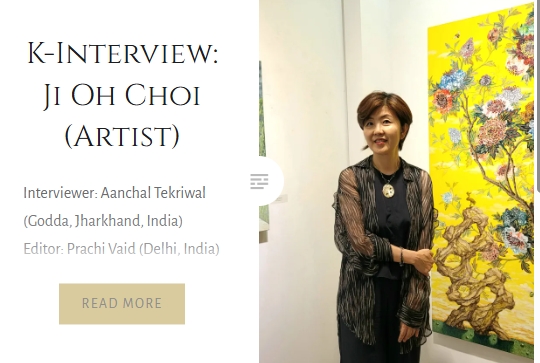
,, Hallyuism 인터뷰 – 지오 최 (아티스트)
인터뷰어: 안찰 테크리왈
신선한 시선으로 세상을 바라보게 하는 대한민국 현대미술 작가 지오 최를 소개합니다. 서울을 기반으로 활동하며 명문 홍익대학교를 졸업한 그는, 10년간 애니메이션을 가르친 후 자신의 예술 작업에 온전히 전념하기로 결심했습니다. 지오 최는 한지를 활용하고, 리본으로 묶인 달걀, 포도 송이, 그리고 실제 장소라기보다 꿈처럼 느껴지는 풍경 등 지극히 개인적인 상징을 작품 속에 녹여내는 작업으로 잘 알려져 있습니다.
2012년, 세계 여행을 떠난 한 해는 그녀의 삶을 완전히 바꾸어 놓았습니다. 부엌 식탁에서 시작된 작업은 더 넓은 세상으로 확장되었습니다. 오늘날 그녀의 작품은 국립현대미술관에 소장되어 있으며, 홍콩과 로스앤젤레스 등 세계 여러 도시로 뻗어나가고 있습니다.
우리는 지오 최와 함께 그녀의 시작, 지금까지 걸어오게 한 원동력, 그리고 가장 개인적인 기억을 세계를 여행하는 예술로 승화시킨다는 것이 어떤 의미인지에 대해 이야기를 나누었습니다.
1. 처음으로 작가님의 작업을 접하는 독자분들을 위해 본인 소개를 부탁드립니다.
안녕하세요. 예술을 사랑하고 그림을 그릴 때 가장 큰 행복을 느끼는 작가 지오최입니다. 저는 1966년 한국 서울에서 태어났습니다. 어린 시절부터 화가가 되는 것이 제 꿈이었습니다. 그러나 예술가의 길을 본격적으로 걷기까지는 꽤 오랜 시간이 필요했습니다. 이른 결혼과 어렵게 얻은 임신과 출산, 그리고 육아를 경험하며 삶의 여러 단계를 지나왔고 그 과정에서 게임과 애니메이션 분야에서 일하기도 했으며 대학에서 학생들을 가르치기도 했습니다. 이러한 다양한 역할과 경험 속에서 쌓인 감정과 시선은 오늘날 제가 예술가로 살아가고 작업을 이어가는 데 중요한 밑바탕이 되고 있습니다.저의 작업은 삶에서 마주한 경험과 감정, 그리고 오랜 시간 마음속에 쌓여온 이야기들을 시각적 언어로 풀어내는 과정이라고 할 수 있습니다. 저는 회화를 중심으로 다양한 시각적 언어를 통해 인간의 감정과 삶의 이야기를 탐구하는 작업을 하고 있습니다.
2. 10년 동안 애니메이션을 가르치신 후 본격적으로 회화 작업에 전념하셨습니다. 그 결단을 내리게 된 결정적인 계기는 무엇이었나요?
평면 회화를 중심으로 작업해 온 저에게 애니메이션은 매우 새로운 도전이었습니다. 우연한 기회를 통해 한국의 애니메이션 회사에서 〈오세암〉과 〈하얀 마음 백구>의 애니메이션 아트 디렉팅에 참여하게 되었습니다. 두 작품은 프랑스 안시 애니메이션 페스티벌과 칸 국제 애니메이션 부문에서 수상하며 좋은 평가를 받았고, 그 이후 저는 대학에서 교수로 초빙되어 애니메이션과 게임 분야를 학생들에게 가르치게 되었습니다. 학생들과 함께 애니메이션과 게임을 연구하고 창작을 지도하는 시간은 매우 즐겁고 활기찬 경험이었습니다. 약 10년 동안의 교직 생활은 저에게도 큰 성장의 시간이었고 그동안 저는 개인전과 여러 그룹전을 통해 미디어 작품을 본격적으로 선보일 수 있었습니다. 애니메이션 작업을 통해 제 예술적 영역 역시 더욱 확장되었습니다. 하지만 시간이 흐르면서 예술가로서 제 자신의 작업에 더 깊이 집중할 시간이 필요하다는 생각이 점점 커졌습니다. 결국 저는 2011년에 약 10년간의 교직 생활을 마무리하고 그 이후에는 회화와 개인 작업에 더욱 전념하는 길을 선택하게 되었습니다. 그 결정은 제 삶에서 중요한 전환점이었고 이후 저는 보다 자유롭게 제 예술 세계를 탐구할 수 있게 되었습니다.
3. 홍익대학교에서 동양화를 전공하시고, 도자기를 만들고, 가구를 제작하며, 벽에 스프레이 페인팅을 하는 등 다양한 시도를 거치셨습니다. 이러한 경험들이 오늘날의 작가님을 어떻게 형성했나요?
대학에서 동양화를 전공하며 한국만이 지닌 고유한 미의식에 대해 깊은 관심을 갖게 되었습니다. 특히 한국의 전통 민화와 분청사기가 지닌 자유로운 표현과 소박하면서도 생동감 있는 미감에 큰 매력을 느꼈습니다. 이러한 전통적 미학은 지금도 제 작업의 중요한 뿌리가 되고 있습니다. 대학원 졸업 이후에는 도자기 작업, 가구 디자인, 그래피티, 애니메이션 등 다양한 분야에 관심을 갖고 여러 시도를 해보았습니다. 서로 다른 매체와 방식의 작업을 경험하면서 예술을 바라보는 시야가 더욱 넓어졌고 이는 제 작업의 내용과 표현을 더욱 풍부하게 만드는 계기가 되었습니다.이러한 다양한 경험들은 제가 보다 자유롭게 표현하고 실험할 수 있는 기반이 되었으며 오늘날 제 작업 세계를 형성하는 중요한 요소가 되었습니다. 결국 이 모든 시도의 출발점에는 호기심과 즐거움이 있다고 생각합니다. 그리고 저는 그 두 가지가 예술가가 작업을 지속해 나가는 가장 중요한 원동력이라고 믿습니다.
4. 리본으로 묶인 달걀은 6년간의 기다림 끝에 탄생한 상징으로, 작가님의 대표적인 이미지가 되었습니다. 그렇게 개인적인 경험이 어떻게 작업 세계의 중심 언어가 되었나요?
사람마다 인생에서 가장 소중하게 원하는 것이 있다고 생각합니다. 저에게 그것은 바로 생명이었습니다. 저는 오랫동안 아이를 갖고 싶었지만 쉽게 임신이 되지 않았고 약 6년 동안 불임의 시간을 겪었습니다. 그 시간은 저에게 생명의 의미를 깊이 생각하게 만든 매우 특별한 경험이었습니다. 오랜 기다림 끝에 아이를 갖게 되었을 때 저는 생명이 얼마나 귀하고 감사한 선물인지 더욱 깊이 느끼게 되었습니다. 그 경험에서 탄생한 이미지가 바로 리본으로 묶인 달걀입니다. 달걀은 생명의 탄생을 상징하고 그 위에 묶인 리본은 우리에게 주어진 소중한 선물이라는 의미를 담고 있습니다. 처음에는 매우 개인적인 경험에서 시작된 이미지였지만 작업을 이어가면서 그 의미는 점점 더 확장되었습니다. 저는 이 이미지를 통해 인간뿐만 아니라 이 지구에 존재하는 모든 생명은 귀하지 않은 것이 없으며 모든 생명은 각자의 부모와 존재로부터 깊은 사랑과 보호 속에서 태어난다는 메시지를 표현하고자 했습니다. 그래서 제 작업 속의 달걀은 단순한 형태가 아니라 이 세상의 모든 생명이 지닌 존엄성과 사랑을 상징하는 이미지가 되었습니다.
5. 2012년 세계 여행 이후, 식탁 대신 풍경을 그리기 시작하셨습니다. 작가로서의 시선에 어떤 변화가 있었나요?
저는 같은 학과에서 만난 남편과 결혼한 이후 한국의 여러 지역을 함께 여행하며 많은 풍경을 스케치해 왔습니다. 그러던 중 2012년, 남편과 아들과 함께 약 1년 동안 세계 여행을 하게 되었고 이 경험은 제 작업에 매우 중요한 전환점이 되었습니다. 이 여행은 단순히 작업의 소재를 확장시킨 것에 그치지 않고 제가 세상을 바라보는 정신적인 시선에도 큰 변화를 가져왔습니다. 다양한 나라의 자연과 풍경을 마주하면서 저는 그 안에 존재하는 삶과 죽음 그리고 자연이 지닌 깊은 아름다움에 대해 더욱 깊이 생각하게 되었습니다. 저는 풍경만을 그리는 화가는 아니지만 풍경을 통해 그 안에 흐르고 있는 시간과 존재의 이야기를 바라보게 되었습니다. 자연 속에서 인간은 매우 작은 존재이며 결국 잠시 스쳐 지나가는 존재일지도 모릅니다. 하지만 저는 그림을 통해 제가 지금 이 순간 느끼고 있는 생각과 감정을 가능한 한 진솔하게 기록하고 남기고자 합니다. 그래서 제 풍경 작업은 단순한 자연의 재현이 아니라 그 안에서 느끼는 삶과 존재에 대한 사유를 담아내는 과정이라고 할 수 있습니다. 세계 여행은 제 작업을 개인적인 이야기에서 보다 넓은 세계와 존재에 대한 이야기로 확장시켜 준 중요한 경험이었습니다.
6. 작가님의 작품이 국립현대미술관 미술은행 프로그램을 통해 소장되었습니다. 이러한 제도적 인정은 개인적으로 어떤 의미를 지니나요?
국립현대미술관 미술은행 프로그램에 지원할 수 있는 가장 큰 크기인 132×165cm 작품 세 점이 약 3년에 걸쳐 소장되었습니다. 하지만 처음부터 순조로웠던 것은 아니었습니다. 초기 지원에서는 여러 차례 선정되지 못하기도 했습니다. 아마도 제가 사용하는 재료와 표현 방식이 전통적인 한국 동양화의 재료나 형식과는 다소 다른 점이 있었기 때문이라고 생각합니다. 그럼에도 저는 언젠가 제 작업이 동시대의 현대 동양화를 보여주는 하나의 가능성이 될 수 있다는 믿음을 가지고 꾸준히 작업을 이어왔습니다. 그 결과 제 작품이 국립현대미술관 미술은행에 소장되었다는 점은 개인적으로 매우 의미 있는 일이라고 생각합니다. 물론 제도적인 인정도 중요하지만 이 경험은 제가 추구해 온 현대적인 동양화의 방향을 더욱 확장하고 발전시킬 수 있는 계기가 되었습니다. 앞으로도 저는 더욱 진취적인 자세로 작업을 이어가며 깊이 있는 예술 세계를 탐구해 나가고자 합니다. 이러한 경험은 제가 걸어온 작업의 방향이 틀리지 않았다는 작은 확신을 주었고 앞으로의 작업을 이어가는 큰 힘이 되었습니다.
7. 삼성전자의 패밀리 허브(Family Hub)에 작가님의 작품이 적용되어 전 세계 가정의 부엌에 놓이게 되었습니다. 작업의 시작이 식탁이었다는 점에서, 그 경험은 어떤 느낌이었나요?
제 작품에 과일, 채소, 달걀과 같은 식재료들이 자주 등장하게 된 것은 어린 시절의 기억에서 시작되었습니다. 저는 어머니와 함께 시장에 가고, 집에서 함께 음식을 만들던 시간을 통해 음식과 식탁이 지닌 따뜻한 분위기를 자연스럽게 경험하며 자랐습니다. 결혼 이후에는 요리가 제 일상 속에서 또 하나의 새로운 경험이 되었고 그 과정에서 만나는 다양한 식재료들 속에 제 감정과 이야기를 투영한 그림을 그리기 시작했습니다. 이러한 작업은 많은 사람들에게 공감을 얻었고 그 인연이 이어져 삼성전자와 협업하게 된 것이라고 생각합니다. 사실 제 꿈 중 하나는 제 그림이 사람들이 가장 행복한 순간을 나누는 공간인 ‘부엌’에 걸리는 것이었습니다. 그래서 삼성전자의 패밀리 허브를 통해 제 작품이 전 세계 여러 가정의 부엌에서 보여질 수 있게 된 것은 저에게 매우 특별하고 기쁜 경험이었습니다. 저의 그림을 통해 그 공간을 사용하는 사람들에게 작은 기쁨과 따뜻한 감정이 전달되기를 바라고 있습니다. 부엌은 가족과 삶의 이야기가 가장 많이 나누어지는 공간이라고 생각합니다. 그래서 제 그림이 그 공간 속에서 사람들의 일상과 함께할 수 있다는 점이 더욱 의미 있게 느껴집니다.
8. 한 달 동안 베를린의 한 집을 열 번 넘게 그리셨다고 들었습니다. 그 장소가 작가님을 놓아주지 않았던 이유는 무엇이었나요?
1년 동안의 세계 여행은 끊임없는 이동의 연속이었습니다. 그런 여정 속에서 독일 외곽의 한 집에서 약 한 달 동안 머물렀던 시간은 저에게 특별한 안정감과 평화를 선물해 주었습니다. 그 집이 저에게 특별했던 이유는 단순히 장소의 아름다움 때문만은 아니었습니다. 그 집에 살고 계셨던 할아버지와 할머니와 따뜻한 관계를 맺으며 지낸 시간이 저에게 깊은 인상을 남겼기 때문입니다. 그곳에서 보냈던 조용하고 평화로운 일상 그리고 두 분과 나누었던 따뜻한 기억들은 제 마음속에 매우 소중한 장면으로 남아 있습니다. 그래서 저는 그 집을 열 번이 넘도록 반복해서 그리게 되었습니다. 그 집을 그릴 때마다 당시 느꼈던 평화로운 분위기와 따뜻한 기억들이 다시 제 안을 감싸는 느낌을 받기 때문입니다. 힘들거나 지칠 때면 그 장소를 떠올리며 그림을 그리기도 합니다. 어떤 장소를 특별히 사랑하게 되는 감정을 ‘토포필리아(Topophilia)’, 즉 장소에 대한 애정이라고 부르기도 합니다. 제 마음속에는 그런 장소들이 여러 개 존재하며 그 기억과 감정들이 제 작업 속에서 계속 새로운 이야기로 이어지고 있습니다.
9. 리본 달걀과 포도 그림은 이제 한눈에 알아볼 수 있는 상징이 되었습니다. 새로운 작업을 시작할 때, 출발점은 무엇인가요? 이미지인가요, 기억인가요, 색인가요, 아니면 또 다른 무엇인가요?
저에게 리본, 달걀프라이, 포도, 꽃과 같은 이미지들은 단순한 소재가 아니라 제 마음속에 깊이 새겨진 기억과 생각을 상징하는 요소들입니다. 이러한 이미지들은 제 삶에서 경험한 감정과 이야기들을 시각적으로 표현하는 언어가 됩니다. 예를 들어 제 그림 속 여러 곳에서 발견할 수 있는 메추리 천사는 탄생을 꿈꾸는 작은 생명체를 상징합니다. 또한 도롱뇽은 위기의 순간에 스스로 꼬리를 끊어내며 자신을 지켜내는 생명력을 상징합니다. 그 외에도 붉은 지붕의 집, 뱀, 새, 구름과 같은 다양한 요소들은 모두 제 내면에 존재하는 기억과 감정, 그리고 삶의 이야기들을 상징적으로 드러내는 이미지들입니다. 그래서 새로운 작업을 시작할 때의 출발점은 하나의 특정한 요소라기보다는 제 안에 쌓여 있는 기억과 감정에서 자연스럽게 떠오르는 상징적인 이미지들이라고 할 수 있습니다. 저는 그 이미지들을 통해 제 삶의 경험과 생각들을 그림 속에서 계속해서 이야기해 나가고 있습니다. 결국 제 작업은 하나의 이미지를 그리는 것이 아니라, 제 삶의 기억과 감정들이 상징적인 이미지의 형태로 화면 위에 나타나는 과정이라고 생각합니다.
10. 2008년 첫 개인전을 열고, 2026년 현재까지도 붓으로 새로운 이야기를 이어가고 계십니다. 갤러리 담에서 첫 작품을 걸던 그때의 지오 최에게 해주고 싶은 말이 있다면 무엇인가요?
화가의 길을 막 걷기 시작한 지오최의 첫 개인전을 진심으로 축하해요. 하루 종일 학생들을 가르치고, 집안일을 하고, 아이를 재운 뒤 새벽 늦게까지 잠을 줄여가며 그림을 그리던 그 절실하고 소중한 시간들을 항상 기억했으면 합니다. 남들보다 일찍 전시를 시작하지 못했지만, 누구보다 오래도록 그림을 사랑하며 꾸준히 그리는 화가가 되길 바랍니다. 시간이 흘러 많이 유명해지고 나이가 들어도 어린 시절 그림을 시작했을 때의 순수함과 첫 마음을 잊지 않길 바래요. 힘들더라도 자신을 표현하기 위해 노력했던 첫 시작을 소중히 간직하고 지금까지 걸어온 모든 과정에 스스로 자부심을 느끼길 바랍니다. 정말 수고 많았어요. 앞으로도 한국을 대표하는 화가로 성장하며 계속해서 자신만의 이야기를 예술로 풀어가길 기도할게요.
11. 아드님이 어릴 적 가지고 놀던 장난감을 모두 작업실에 보관하고 계신다고 들었습니다. 지금 그 물건들을 바라볼 때, 어떤 의미로 다가오나요?
저는 사랑하는 사람들과 나눈 기억의 조각들을 물건 속에 자연스럽게 투영합니다. 저에게 아들은 제가 세상에 존재하는 이유이자 모든 어려움을 이겨낼 수 있도록 힘을 주는 특별한 존재였습니다. 아들과 함께 놀았던 장난감들은 단순히 그의 것이 아니라 제게도 하나하나 소중한 추억이 담긴 물건들입니다. 약 10년 전부터 저는 그 작은 장난감들에 의미를 부여하기 시작했습니다. 나무로 만든 말 위에 하나씩 장난감을 얹으며 어린 시절의 기억과 가족과의 순간을 작품 속으로 끌어왔습니다. 말띠인 저의 등에 아들의 어린 시절 흔적들이 올려지듯 그 작은 장난감들은 이제 새로운 이야기들을 품고 앞으로도 계속 저의 작품 속에서 살아갈 것입니다. 제 작업은 이렇게 사랑과 기억이 물리적 사물 속에 스며들어 새로운 예술로 다시 태어나는 과정이기도 합니다. 이렇게 물건에 담긴 기억과 감정을 작품으로 재해석하는 과정은 제 작업의 중심적인 방식이자 삶과 예술을 이어주는 매개체입니다.
12. 동양화는 서양의 시각과는 다른 세계관을 지니고 있습니다. 그러한 철학은 현재 작업에 얼마나 살아 숨 쉬고 있다고 생각하시나요?
동양화에서 가장 중요한 원칙은 대상의 외형적 닮음보다 그 안에 깃든 살아 있는 기운을 포착하는 데 있습니다. 화가는 대상의 겉모습을 재현하는 것이 아니라 그 본질적인 생동감을 화폭에 담아내야 하며 이는 곧 화가 자신의 정신적 수양과도 직결됩니다. 동양의 화가들은 자연을 단순히 관찰하거나 정복해야 할 대상으로 보지 않았습니다. 오히려 자연은 인간이 돌아가야 할 근원이자 자아와 동일시되는 존재였습니다. 제가 꽃을 그릴 때 꽃 자체를 묘사하는 것이 아니라 제가 꽃이 되어 느낀 기분과 생명력을 표현하는 것이 바로 동양의 세계관입니다. 서양 미학이 ‘무엇을(What) 그리느냐’에 집중하며 분석적 사고를 발전시켰다면 동양 미학은 ‘어떻게 존재하느냐(How to be)’라는 존재론적 가치를 중시합니다. 저의 작업은 이러한 동양적 미학과 세계관을 현대적으로 해석하여 표현하고 있으며앞으로도 더욱 깊은 철학적 사고가 작품 속에 자연스럽게 스며들도록 노력하고자 합니다. 제 작업은 단순한 시각적 표현이 아니라 동양의 존재론적 세계관을 현대적 언어로 재해석하는 시도이기도 합니다.
13. 그림을 그리지 않을 때, 스케치하지 않을 때, 다음 전시를 생각하지 않을 때의 지오 최는 어떤 사람인가요? 그리고 무엇을 가장 사랑하시나요?
이 질문은 저에게 매우 신선하게 다가왔습니다. 저는 그림을 그리지 않는 순간에도 항상 그림을 생각하며 살아왔다는 것을 새삼 깨닫게 되었습니다. 아마 모든 사람들이 자신이 몰두하고 사랑하는 일과 완전히 분리되어 살아갈 수 없듯 저 또한 그림과 떨어져 본 적이 거의 없다는 것을 알게 되었습니다. 그럼에도 저는 이러한 자신을 다행스럽게 생각합니다. 그림과 삶이 자연스럽게 이어져 있기 때문에 어느 찰나 스쳐 지나가는 영감도 놓치지 않고 붙잡을 수 있기 때문입니다. 동시에 이 질문을 통해 그림과 완전히 분리된 상태에서의 진정한 나, 모든 것에서 해탈한 상태의 나를 생각해보는 계기가 되었습니다. 결국 저는 그림을 사랑하고 그림을 통해 삶의 순간들을 관찰하고 느끼는 자신을 가장 사랑하는 것 같습니다. 그리고 그 과정 속에서 저 자신과 세계를 연결하는 기쁨을 발견합니다. 그림과 분리된 시간조차 제게는 영감과 자기 성찰의 순간이며 그것 또한 제가 사랑하는 삶의 일부입니다.
14. 인도에는 마두바니, 와를리, 파타치트라처럼 일상과 자연을 바탕으로 한 풍부한 민속 회화 전통이 있습니다. 평범한 일상도 그릴 가치가 있다는 믿음은 작가님의 작업과도 닿아 있는 듯합니다. 이러한 연결성을 느끼시나요? 그리고 점점 늘어나는 인도 관객들에게 전하고 싶은 말씀이 있다면 무엇인가요?
저는 민속회화가 지닌 가치를 매우 높이 평가합니다. 인도를 여행하면서 마두바니, 와를리, 파타치트라 등 인도 민속회화의 독특하고 아름다운 표현 방식에 큰 매력을 느꼈습니다. 그 표현 방식에서 저는 한국 민화에서 느꼈던 감정과 유사한 부분을 발견할 수 있었습니다. 특히 천진난만한 표현, 상상력 가득한 이야기, 화려한 색채가 저에게 큰 영감을 주었습니다. 저는 평범한 일상 속에서도 예술가의 눈으로 특별한 순간과 의미를 찾아내고 그 안에서 자유롭게 자신을 투영하는 작업을 하고자 합니다. 인도에서 머물렀던 두달간의 여행에서 역사와 예술, 철학이 풍부한 나라임을 느끼게 했고, 특히 특별한 에너지와 집중의 경험을 제게 선물해 주었습니다. 한국을 방문하는 많은 인도인들이 한국의 자연, 역사, 문화, 예술에도 관심을 갖고 그 아름다움을 즐기며 공감할 수 있기를 바랍니다. 제 작업이 인도 관객들에게 일상 속 작은 순간과 생명 그리고 상상력의 즐거움을 전달할 수 있기를 바랍니다.
추가질문(제가 만든)
15. 인도를 여행하며 받은 영감으로 작업을 한것이 있으신가요?
1년간의 세계 여행 중, 마지막 여정이 인도였습니다. 저는 약 두 달간 인도에 머물며 스케치를 하고, 책을 읽고, 글을 쓰며 시간을 보냈습니다. 어느 날 우연히 마주친 어느 집 마당에 피어 있던 화려하고 아름다운 주황색 꽃에 완전히 매료되어 스케치를 하게 되었습니다. 꽃의 이름조차 알 수 없었지만 그 고귀하고 특별한 아름다움은 제 기억 속에 깊이 남았습니다. 여행 후 지난 10여 년 동안 저는 그 꽃을 반복해서 그리며 작품 속에서 표현해 왔습니다. 몇 년 전 불교 공부를 통해 이 꽃이 아쇼카왕의 이름을 딴 아쇼카꽃이며 석가모니의 어머니가 산통을 느꼈을 때 들었던 신성한 꽃이라는 것을 알게 되었습니다. 불교에서는 특별한 의미를 지닌 꽃이었지만 그 사실을 알기 전에도 저는 이미 꽃에서 특별한 힘과 위로를 느꼈고 작품 제목을 “행복을 주는 나무”로 지었습니다. 실제로 이 나무의 이름은 ‘무우수’ 즉 걱정이 없는 나무라고도 합니다. 인도 여행을 통해 저는 제게 큰 의미가 있는 꽃을 발견했고 그 이후로도 계속 아쇼카꽃을 그리며 저 자신과 관람객에게 위로와 행복을 전달하고 있습니다. 그래서 이번 인도 인터뷰 제안을 받았을 때 더욱 놀랍고 반가웠습니다. 인도는 제게 매우 특별한 나라였기 때문입니다. 아쇼카꽃을 통해 인도에서 받은 영감이 지금도 제 작품 속에서 살아 숨 쉬며 보는 이들에게 작은 위로와 행복을 전달하길 바랍니다.
인터뷰를 마치며
이번 인터뷰를 통해 정말 감사한 마음을 전하고 싶습니다. 보내주신 질문들은 단순한 인터뷰를 넘어, 제 자신을 돌아보게 하는 매우 소중하고 의미 있는 시간이었습니다.바쁘다는 이유로 잊고 있었던 기억들을 다시 떠올릴 수 있었고, 다시 한 번 제가 예술가로서 세상에 어떤 기여를 해야 하는지, 그 책임과 다짐을 되새길 수 있었습니다.이처럼 깊이 있는 성찰의 기회를 주셔서 진심으로 감사드립니다. 이번 경험은 제 작업과 삶에 또 다른 힘과 영감을 주는 순간이 되었습니다.
English
Hallyuism Interview with Ji Oh Choi (Artist)
Interviewer: Aanchal Tekriwal
Meet Ji Oh Choi, a South Korean contemporary artist, whose work invites us to see the world with fresh eyes. Based in Seoul and a graduate of the prestigious Hongik University, she spent a decade teaching animation before devoting herself fully to her art. Choi is known for blending hanji paper with deeply personal symbols like eggs tied with ribbons, clusters of grapes, and landscapes that feel more like dreams than places.
In 2012, a year of travel changed everything, pulling her from the kitchen table out into the wider world. Today her paintings live in Korea's National Museum of Modern and Contemporary Art and have travelled to Hong Kong, Los Angeles, and beyond.
We sat down with Ji Oh Choi to talk about where it all began, what keeps her going and what it really means to turn your most personal memories into art that travels the world.
1. Could you please introduce yourself to our readers and to anyone discovering your work for the first time?
Hello. I am Jioh Choi, an artist who loves art and feels the greatest happiness when painting. I was born in Seoul, South Korea, in 1966. Since childhood, my dream has been to become a painter. However, it took quite a long time before I could fully embark on the path of an artist. I went through many stages of life, including an early marriage, a long-awaited pregnancy and childbirth, and the experience of raising a child. Along the way, I also worked in the fields of game and animation and later taught students at a university. The emotions and perspectives accumulated through these diverse roles and experiences have become an important foundation for the life I now lead as an artist and for the work I continue to create. My artistic practice can be described as a process of expressing the experiences, emotions, and stories that have accumulated in my life over time through a visual language. Centered on painting, I explore human emotions and the narratives of life through a variety of visual expressions.
2. You spent ten years teaching animation before committing fully to painting. What finally made you take that leap?
For me, whose work had primarily centered on two-dimensional painting, animation was a completely new challenge. Through a fortunate opportunity, I became involved in art directing the animations “Oseaman”, “White Heart Baekgu” a Korean animation company. Both works received positive recognition, winning awards at the Annecy International Animation Film Festival in France and in the animation section at Cannes. Following these achievements, I was invited to join a university as a professor, where I taught students in the fields of animation and game design. Working with students—researching animation and games together and guiding their creative projects—was an extremely enjoyable and energetic experience. My roughly ten years in academia were also a period of significant personal growth. During that time, I was able to present media-based works more actively through solo exhibitions and various group exhibitions. Through my work in animation, my artistic practice expanded in many ways. However, as time passed, I increasingly felt the need to devote more time and deeper focus to my own work as an artist. In 2011, I eventually concluded my ten-year academic career and chose to dedicate myself more fully to painting and my personal artistic practice. That decision became an important turning point in my life, allowing me to explore my artistic world with greater freedom.
3. You studied oriental painting at Hongik, made pottery, built furniture, and spray-painted walls before finding your signature voice. How did all of that shape the artist you are today?
While studying traditional Korean painting at university, I developed a deep interest in the unique aesthetic sensibilities of Korea. In particular, I was strongly drawn to the free expression and the simple yet lively beauty found in traditional Korean minhwafolk paintings and buncheongceramics. These traditional aesthetics remain an important root of my work even today. After graduating from graduate school, I explored a wide range of artistic fields, including ceramics, furniture design, graffiti, and animation. Experiencing different media and working methods broadened my perspective on art, and it also enriched both the content and the forms of expression in my work. These diverse experiences have provided a foundation that allows me to express myself more freely and to continue experimenting. They have become essential elements in shaping the artistic world I inhabit today. Ultimately, I believe that curiosity and joy lie at the starting point of all these attempts. I also believe that these two qualities are the most important driving forces that enable an artist to continue creating.
4. The egg tied with a ribbon is one of your most recognised symbols, born from 6 years of waiting to become a mother. How did something so personal become the centre of your visual language?
I believe that everyone has something in life that they cherish most. For me, that was life itself. I had long wished to have a child, but it was not easy for me to conceive, and I experienced about six years of infertility. That period was a profoundly meaningful experience, as it made me deeply reflect on the significance of life. When I finally became a parent after such a long wait, I felt even more deeply how precious and grateful a gift life truly is. From that experience, the image of the ribbon-tied egg was born. The egg symbolizes the birth of life, and the ribbon tied around it signifies the precious gift that has been given to us. At first, this image arose from a deeply personal experience, but as my work continued, its meaning gradually expanded. Through this image, I wanted to express that not only human life, but all life on this Earth is precious, and that every living being is born within profound love and protection from its parents and surroundings. Thus, the eggs in my work are not merely forms; they have become symbols of the dignity and love inherent in all life on this planet.
5. In 2012, you travelled the world and came back painting landscapes instead of dining tables. What changed in your vision as an artist?
After marrying my husband, whom I met in the same department at university, we traveled together to many different regions of Korea and often sketched the landscapes we encountered along the way. Then in 2012, my husband, my son, and I set out on a world journey that lasted for about a year. This experience became a very important turning point in my work. The journey did more than simply expand the subjects of my paintings; it also brought about a profound change in the way I see the world on a spiritual level. Encountering the landscapes and nature of many different countries led me to think more deeply about life and death, and about the profound beauty inherent in nature. Although I am not exclusively a landscape painter, landscapes have become a way for me to contemplate the passage of time and the stories of existence that flow within them. In nature, human beings are very small, and perhaps we are only passing presences in this vast world. Yet through painting, I hope to record and preserve as honestly as possible the thoughts and emotions I experience in the present moment. For this reason, my landscape paintings are not simply representations of nature; they are a process of reflecting on life and existence as I experience them within the natural world. The world journey expanded my work from a personal narrative toward a broader reflection on the world and on existence itself.
6. Your work has been collected by Korea's National Museum of Modern and Contemporary Art through the Art Bank programme. What does that kind of institutional recognition mean to you personally?
Three of my works, each measuring 132 × 165 cm—the largest size eligible for submission—were acquired by the Art Bank program of the National Museum of Modern and Contemporary Art over a period of about three years. However, the process was not smooth from the beginning. In the early stages, my applications were not selected several times. I believe this may have been because the materials and methods I use differ somewhat from the traditional materials and formats associated with Korean ink painting. Nevertheless, I continued working with the belief that my practice might eventually represent one possible direction for contemporary interpretations of Korean painting. For this reason, having my works collected by the Art Bank of the National Museum of Modern and Contemporary Art is personally very meaningful. While institutional recognition is certainly important, this experience has also encouraged me to further expand and develop the contemporary direction of Korean painting that I have been pursuing. It has given me a quiet confidence that the path I have taken in my work has not been mistaken, and it has become a great source of strength as I continue my artistic journey with a more progressive and committed approach.
7. Samsung put your work on the Family Hub, a product sitting in kitchens everywhere. For an artist whose whole story started at the dining table, how did that feel?
Food ingredients such as fruits, vegetables, and eggs began to appear frequently in my work from memories of my childhood. I grew up accompanying my mother to the market and spending time with her preparing meals at home, naturally experiencing the warm atmosphere that surrounds food and the dining table. After getting married, cooking became another new experience in my daily life. During that time, I began to paint images that reflected my emotions and personal stories through the various ingredients I encountered while cooking. These works resonated with many people, and I believe that connection eventually led to my collaboration with Samsung Electronics. In fact, one of my dreams was for my paintings to hang in kitchens—the place where people share some of the happiest moments of their lives. For that reason, it was a very special and joyful experience for me to see my work displayed in kitchens around the world through Samsung’s Family Hub. I hope that my paintings can bring a small sense of joy and warmth to the people who use those spaces. I believe the kitchen is where family and the stories of everyday life are most often shared, which makes it even more meaningful for me that my work can exist alongside people’s daily lives in such a space..
8. You once painted the same Berlin house more than ten times in a single month. What was it about that place that just would not let you go?
My year-long world journey was a continuous movement from one place to another. In the midst of that journey, the month I spent staying at a house on the outskirts of Germany offered me a special sense of stability and peace. What made that house meaningful to me was not simply the beauty of the place itself. During my stay there, I formed a warm relationship with the elderly couple who lived in the house, and the time I spent with them left a deep impression on me. The quiet and peaceful daily life I experienced there, along with the warm memories I shared with them, remain very precious moments in my mind. Perhaps that is why I ended up painting the house more than ten times. Each time I paint it, I feel as though the peaceful atmosphere and the warm memories I experienced there gently return to embrace me again. Whenever I feel tired or overwhelmed, I sometimes revisit that place through painting. There is a term called topophilia, which refers to a deep affection for a particular place. I believe there are several such places in my heart, and the memories and emotions connected to them continue to unfold as new stories within my work.
9. Your ribbon-tied eggs and grape paintings have become instantly recognisable. When you sit down to start a new piece, what is your starting point? Is it an image, a memory, a colour, or something else?
For me, images such as ribbons, fried eggs, grapes, and flowers are not simply visual motifs. They are elements that symbolize memories and thoughts deeply embedded in my mind. These images become a visual language through which I express the emotions and stories I have experienced in my life. For example, the small quail angel that can be found in several of my paintings symbolizes a tiny life dreaming of birth. The salamander, on the other hand, represents resilience and vitality—the ability of a living being to protect itself by sacrificing its own tail in moments of danger. In addition, various elements such as red-roofed houses, snakes, birds, and clouds all function as symbolic images that reveal the memories, emotions, and stories that exist within me. For this reason, the starting point of a new work is not a single specific element, but rather symbolic images that naturally emerge from the memories and emotions accumulated within me. Through these images, I continue to tell the stories of my experiences and thoughts within my paintings. Ultimately, I do not see my work as simply painting an image; rather, it is a process in which the memories and emotions of my life appear on the canvas in the form of symbolic imagery.
10. Your first solo show was in 2008, and here you are in 2026 still finding new things to say with a brush. What would you tell the Ji Oh who hung that very first painting on the wall at Gallery Dam?
First of all, I would sincerely congratulate Jioh Choi on her very first solo exhibition, just as she was beginning her journey as a painter. I would tell her to always remember those earnest and precious days—teaching students all day, taking care of household responsibilities, putting her child to bed, and then staying up late into the night painting while sacrificing sleep. Although she was not able to begin exhibiting as early as some others, I hope she becomes a painter who loves painting more deeply than anyone else and continues to create for a long time. Even as time passes, even if she becomes more widely known and grows older, I hope she never forgets the purity and sincerity she felt when she first began drawing as a child. Even when things are difficult, I hope she cherishes that very first moment when she tried so earnestly to express herself through art, and takes pride in every step of the journey she has walked so far. You have worked very hard. I hope you will continue to grow as an artist representing Korea and keep telling your own unique stories through art.
11. You kept every single toy your son played with as a child in your studio. What do those small objects mean to you now when you look at them?
I naturally project fragments of memories shared with loved ones into objects. For me, my son has been a special presence—the reason I exist in this world and the strength that allows me to overcome all difficulties. The toys he played with are not only his, but also precious objects that carry memories of our time together. About ten years ago, I began to give these small toys new meaning. By placing each toy on a wooden horse, I brought memories of childhood and moments with my family into my artwork. Just as traces of my son’s early years rest upon my “Year of the Horse” figures, these small toys now carry new stories and will continue to live on in my work. My practice, in this way, becomes a process in which love and memory seep into physical objects and are reborn as new forms of art. Interpreting the memories and emotions embedded in these objects is central to my work and serves as a bridge connecting life and art.
12. Oriental painting has its own way of seeing the world, very different from the Western perspective. How much of that philosophy still lives in your work today?
The most important principle in traditional Korean painting is not to replicate the outward appearance of a subject, but to capture the living energy that resides within it. A painter does not simply reproduce the external form; rather, they convey its essential vitality on the canvas, which is intimately connected to the painter’s own spiritual cultivation. Eastern painters did not see nature merely as something to observe or conquer. Instead, nature was regarded as the source to which humans must return, a presence intimately identified with the self. When I paint a flower, I am not merely depicting the flower itself; I am expressing the feelings and life force I experience by becoming one with the flower. This reflects the core worldview of Eastern art. Whereas Western aesthetics often focus on whatis depicted, emphasizing analytical thought, Eastern aesthetics values how to exist, a philosophical and ontological perspective. My work seeks to reinterpret these Eastern aesthetic principles and worldviews in a contemporary context, expressing them through modern visual language. My practice is therefore not just a form of visual representation, but also an attempt to reinterpret the ontological worldview of Eastern art in a modern framework. Moving forward, I aim to allow this deeper philosophical reflection to continue naturally permeating my work.
13. When you are not painting, not sketching, not thinking about the next show, who is Ji Oh Choi, and what does she love most?
This question felt surprisingly refreshing to me. It made me realize once again that even in moments when I am not painting, I have always been living with painting in my mind. Just as people cannot completely separate themselves from what they are passionate about and love, I have come to understand that I have rarely been truly apart from my art. Yet I am grateful for this. Because my life and painting are naturally intertwined, I can catch fleeting inspirations and moments without letting them slip away. At the same time, your question prompted me to imagine my true self, separate from painting, in a state of detachment from everything. Ultimately, I think what I love most is myself as someone who loves painting and observes and feels life through it. In that process, I discover the joy of connecting myself with the world. Even the moments apart from painting become opportunities for inspiration and self-reflection, and they too are part of the life I cherish and love.
14. India has a rich tradition of folk painting rooted in everyday life and nature, like Madhubani, Warli, and Pattachitra, all carrying the same belief that the ordinary is worth painting. Do you feel a connection there, and what would you say to your growing Indian audience?
I hold the value of folk painting in very high regard. During my travels in India, I was deeply captivated by the unique and beautiful expressions of Indian folk painting traditions such as Madhubani, Warli, and Pattachitra. In their style and spirit, I could sense similarities to the emotions I have experienced in Korean minhwa. In particular, the innocent expressions, imaginative storytelling, and vibrant colors were a great source of inspiration for me. Through my work, I aim to find special moments and meanings even in ordinary daily life through the eyes of an artist, and to freely project myself into those moments. During my two-month stay in India, I experienced a country rich in history, art, and philosophy, and it gifted me a sense of extraordinary energy and focus. I hope that many visitors from India who come to Korea will also take an interest in and appreciate the beauty of Korea’s nature, history, culture, and art. I wish that my work can convey to Indian audiences the joy of everyday moments, life, and imagination.
Additional Question (Prepared by Me)
15. Have you created any works inspired by your travels in India?
India was the final destination of my year-long world journey. I spent about two months there, sketching, reading, and writing. One day, I was completely captivated by a vibrant, beautiful orange flower blooming in the courtyard of a house I happened to pass by, and I began to sketch it. I did not even know the flower’s name, but its noble and extraordinary beauty left a deep impression on my memory. Over the past ten years since that journey, I have repeatedly painted this flower and expressed it in my work. A few years ago, through studying Buddhism, I learned that this flower is the Ashoka flower, named after King Ashoka, and that it is considered sacred because it is said to have bloomed when Buddha’s mother experienced labor pains. Even before knowing its historical and religious significance, I had already felt a special strength and comfort from this flower, and I titled my work “The Tree That Brings Happiness.” In fact, the tree is also called Muusu, meaning “the tree without worries.” Through my travels in India, I discovered a flower of great personal significance, and ever since, I have continued to depict the Ashoka flower, offering comfort and joy to both myself and my audience. That is why receiving this interview request from India felt especially surprising and delightful, as the country holds a very special place in my heart. I hope that the inspiration I received from India continues to live in my work and brings small moments of comfort and happiness to those who view it.
Closing Remarks
I would like to express my sincere gratitude for this interview. The questions you sent me provided not just a simple interview, but a truly valuable and meaningful opportunity to reflect on myself. They allowed me to recall memories that I had forgotten amidst the busyness of daily life, and to once again consider the contributions I should make as an artist, along with the responsibilities and commitments that come with it. I am deeply thankful for this opportunity for profound reflection. This experience has become a moment that gives me new strength and inspiration for both my work and my life.